
How to Create Open-Plan Living That Flows (and Looks Beautiful)
How do I design an open-plan living space that flows?
If you’ve ever wondered how to create an open-plan room that feels cohesive, warm and beautifully connected, this guide walks you through the exact steps we take with our clients every day - including the design principles to follow, the mistakes to avoid, and the thoughtful touches that instantly elevate your space.
Who This article Is For?
This article is perfect for homeowners planning an open-plan renovation or refreshing an existing layout, particularly those based in Wetherby, Harrogate, York, Leeds and surrounding Yorkshire areas.



Key Takeaways
A cohesive colour palette unifies the whole space
Rugs anchor zones and prevent visual drift
Texture brings warmth and acoustics into balance
Layered lighting defines mood and functionality
Layout must be based on the way you actually live
How to Choose a Cohesive Colour Palette for Open-Plan Living
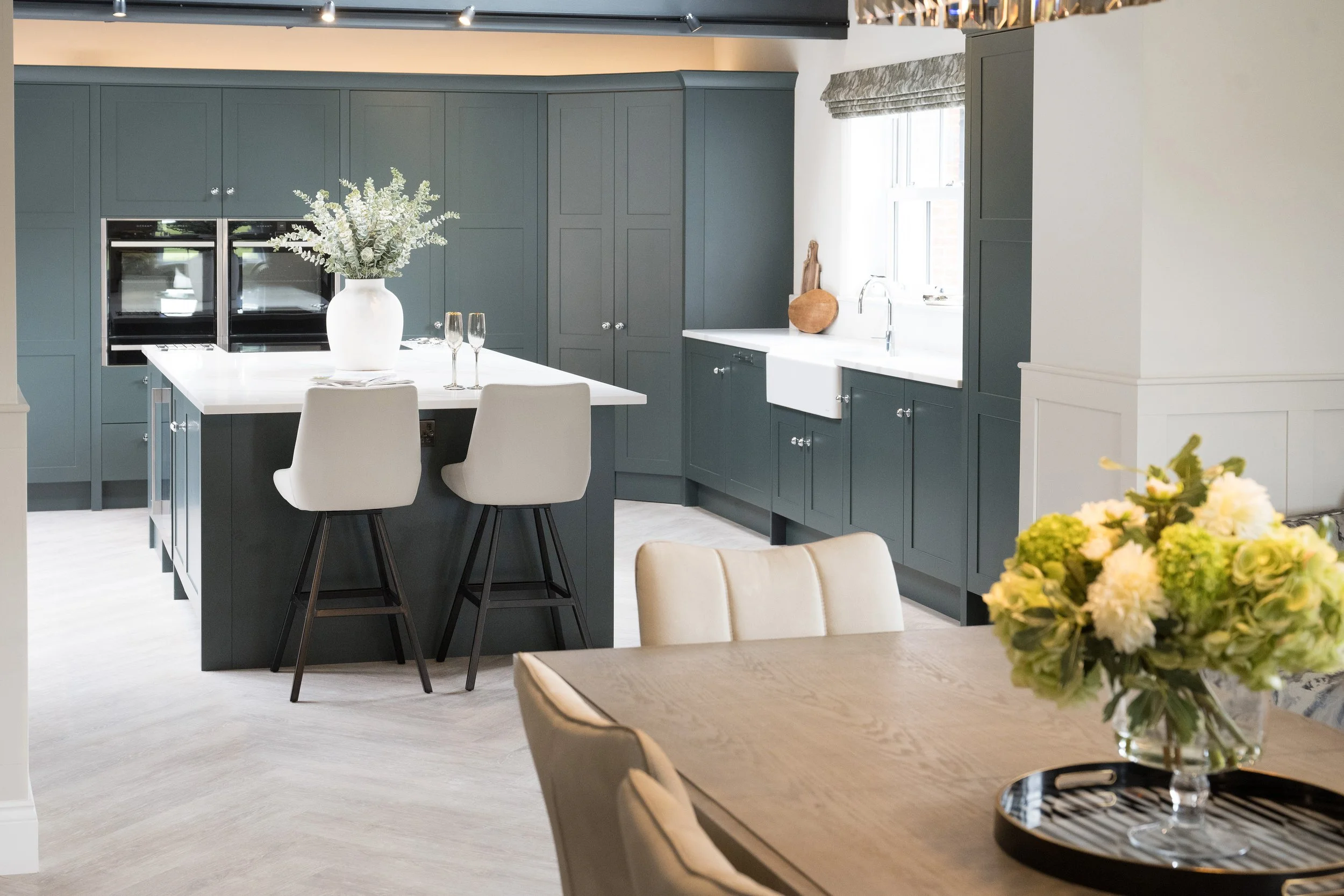
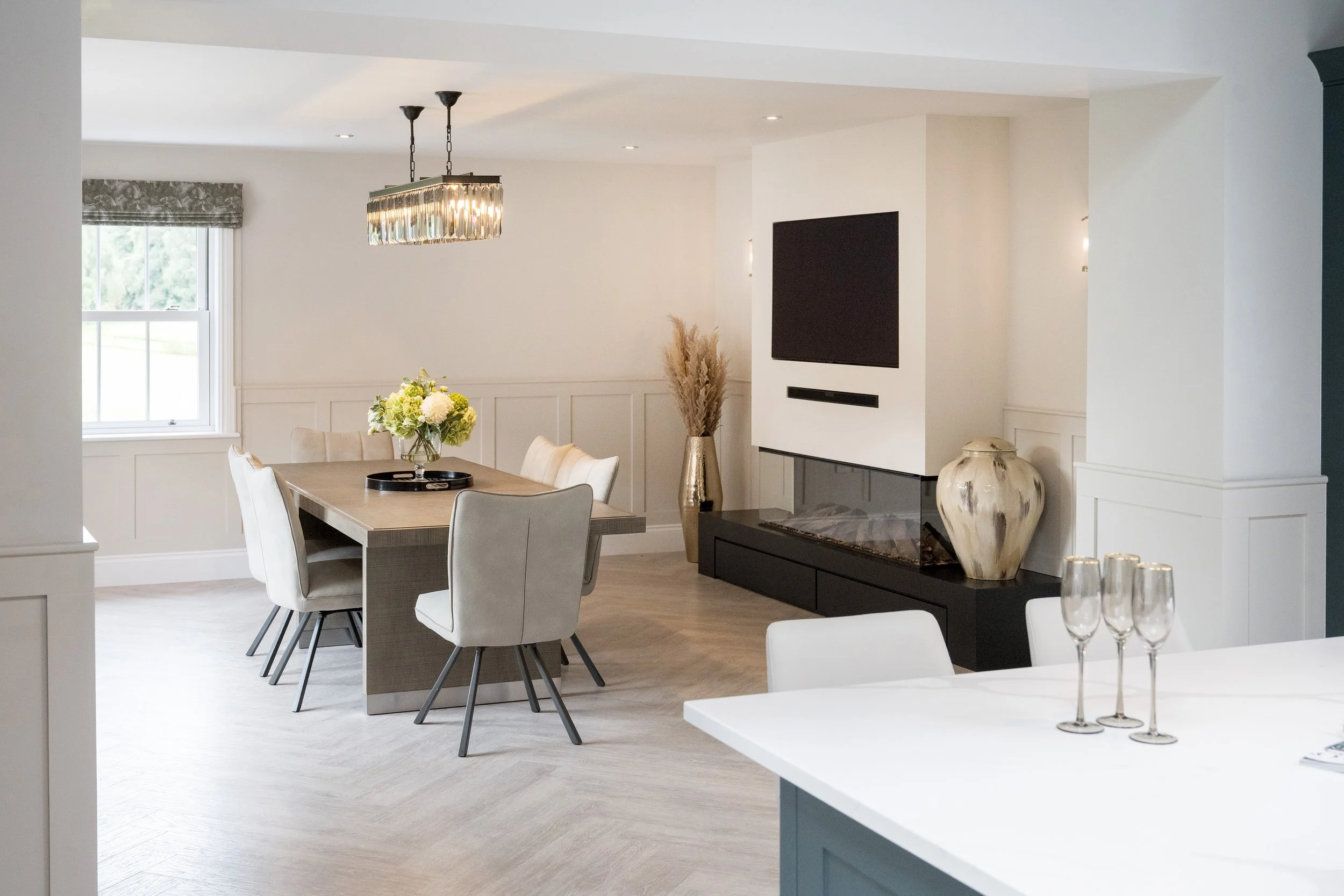
The foundation of any successful open-plan space is a colour palette that gently flows from zone to zone. Even though each area serves its own purpose, visually they are part of a single composition. The most common mistake we see is treating the kitchen, dining and living areas as separate design schemes. When colours clash or shift too abruptly, the room can feel chaotic rather than calm.
Choosing three to five complementary colours and repeating them subtly - through upholstery, joinery, window treatments, artwork and accessories - gently ties each area together. These soft echoes of colour create continuity without making the room feel overly matched or predictable.
Best Rug Sizes for Open-Plan Spaces
One of the simplest ways to divide an open-plan layout without building walls is through rugs. The right rug anchors a zone, gives it purpose and helps guide the layout. When a rug is too small (a very common mistake), the furniture ends up floating awkwardly or visually shrinking the room.
A generous rug under the sofa or beneath the dining table gives each zone definition and weight. It also softens harder surfaces and immediately makes the room feel more cohesive, balanced and inviting.
How Texture Adds Warmth and Depth to Open-Plan Rooms
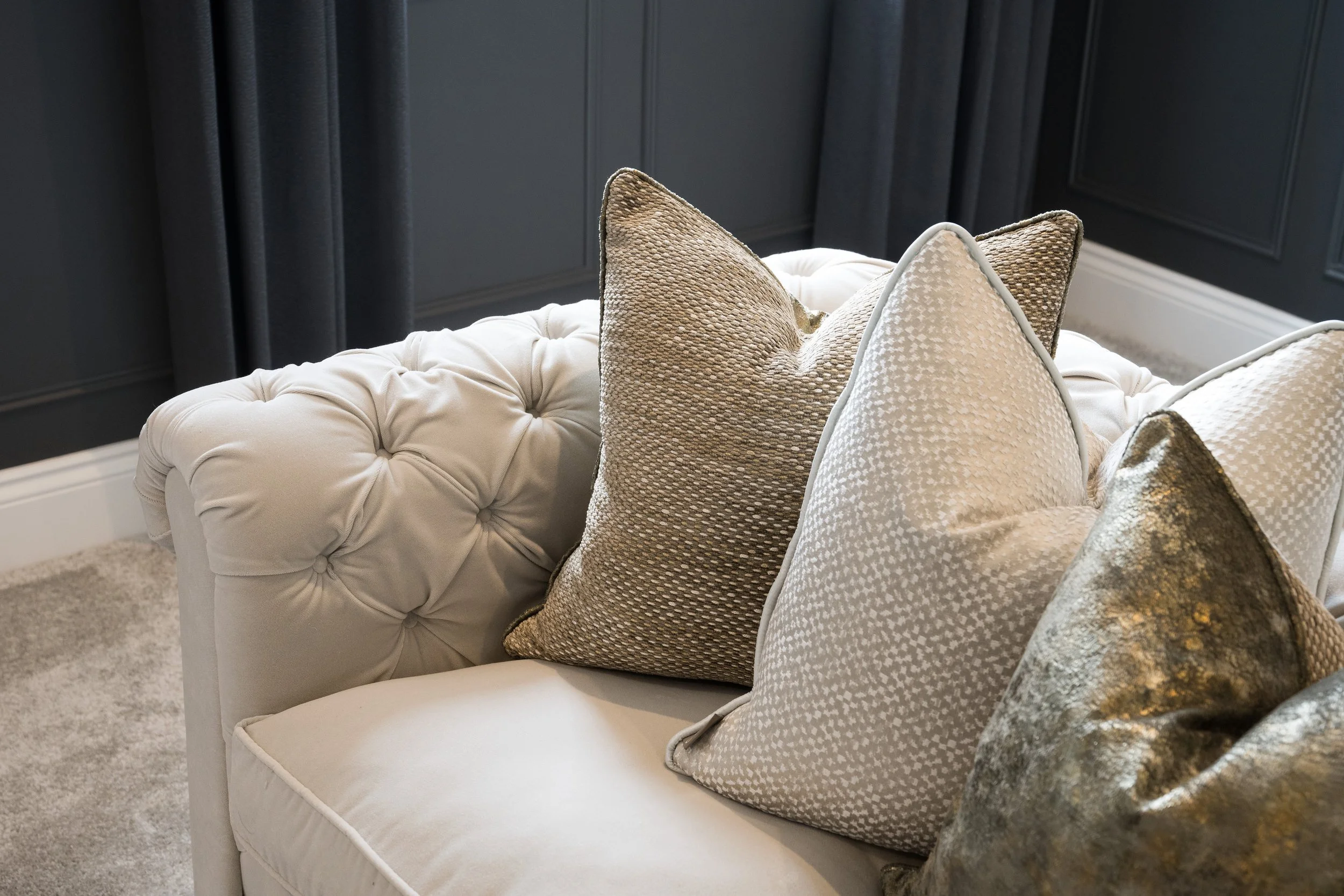
Because open-plan spaces often include large areas of cabinetry, flooring and glazing, texture becomes essential. Without it, the room can feel echoey or cold. Upholstered dining chairs, woven blinds, layered curtains, timber furniture, boucle or velvet accents and soft rugs all work together to soften acoustics and bring warmth back into the space.
Texture also helps create distinction between zones, even when the colour palette remains cohesive.

How to Use Lighting as Part of Your Open-Plan Layout
Lighting is one of the most transformative elements in open-plan living, and it needs the same level of planning as furniture or colour. Overhead lighting alone rarely does the space justice. Instead, think about how each zone is used and what atmosphere you want to create.
Pendants over dining tables or islands act as visual anchors. Floor and table lamps add intimacy to the living area. Task lighting in the kitchen improves function. When layered intentionally, lighting brings the entire space into balance - especially in autumn and winter when natural light is softer.
Uplighting behind your sofa or beneath a feature plant can create a soft, subtle glow in those typically darker areas of your space.
How to Plan a Layout Based on the Way You Live
Before we produce a single layout for a client, we ask how they actually use their home. Do they host regularly? Do they prefer cosy film nights? Do children need space for homework or play? Is smart storage a priority?
The best open-plan spaces aren’t designed around furniture — they’re designed around lifestyles. A layout that supports your daily rhythms naturally feels calmer, more intuitive and easier to live in.
Common Open-Plan Mistakes to Avoid
Design mistakes in open-plan spaces tend to stem from the same few issues: too many competing colours, rugs that are far too small, oversized sofas blocking walkways, lack of layered lighting, and insufficient texture to soften acoustics. Fortunately, these are simple to remedy with the right adjustments - often a change in furniture placement or the addition of textiles makes a significant difference.
FAQ’S
-
Aim for a rug large enough for at least the front sofa legs to sit on it.
-
Use layered window treatments, warm textures and multiple light sources.
-
Positioning the back of the sofa between zones often helps create a natural, unobtrusive division.

Ready to Transform Your Open-Plan Living Space?
We take care of everything - from concept and layout planning to installation and finishing touches.
You can book a Discovery Appointment here, or call 01937 581451 (visits by appointment only).
Whatever it is, the way you tell your story online can make all the difference.