
How do you make a dark room feel brighter?
It’s something we hear from clients all the time.
Perhaps you have a north-facing room that never seems to get much sunlight. Maybe the windows are smaller, the room is naturally shaded, or it simply feels darker than the rest of your home.
And often, the first instinct is to paint everything white.
But making a dark room feel brighter isn’t necessarily about making everything as pale as possible. In fact, some of the brightest-feeling rooms we’ve designed aren’t white at all.
The secret is understanding how light moves through the room, then using colour, reflection, window treatments and lighting to make the most of what you have.
This guide shares some of the principles we use to make darker rooms feel lighter, warmer and much more inviting.
Who This GUIDE Is For?
This guide is ideal for homeowners looking for dark room decorating ideas, wondering how to brighten a north-facing room, or struggling with a space that gets very little natural light.
Whether you’re redesigning the whole room or simply want to make better use of the light you already have, these ideas can completely change how the space feels.
Key Takeaways
Think about reflection, not simply choosing lighter colours
Use mirrors, glass and subtle sheen to bounce light around the room
Choose window treatments that maximise natural daylight
Layer several light sources rather than relying on one ceiling light
Warmer tones can often work better than cool whites in darker rooms
Sometimes embracing a room’s natural cosiness creates the best result
think about reflection, not just colour
One of the biggest misconceptions about dark rooms is that everything needs to be pale.
In reality, the brightest-feeling rooms aren’t necessarily the lightest. They’re often the rooms that use the available light most effectively.
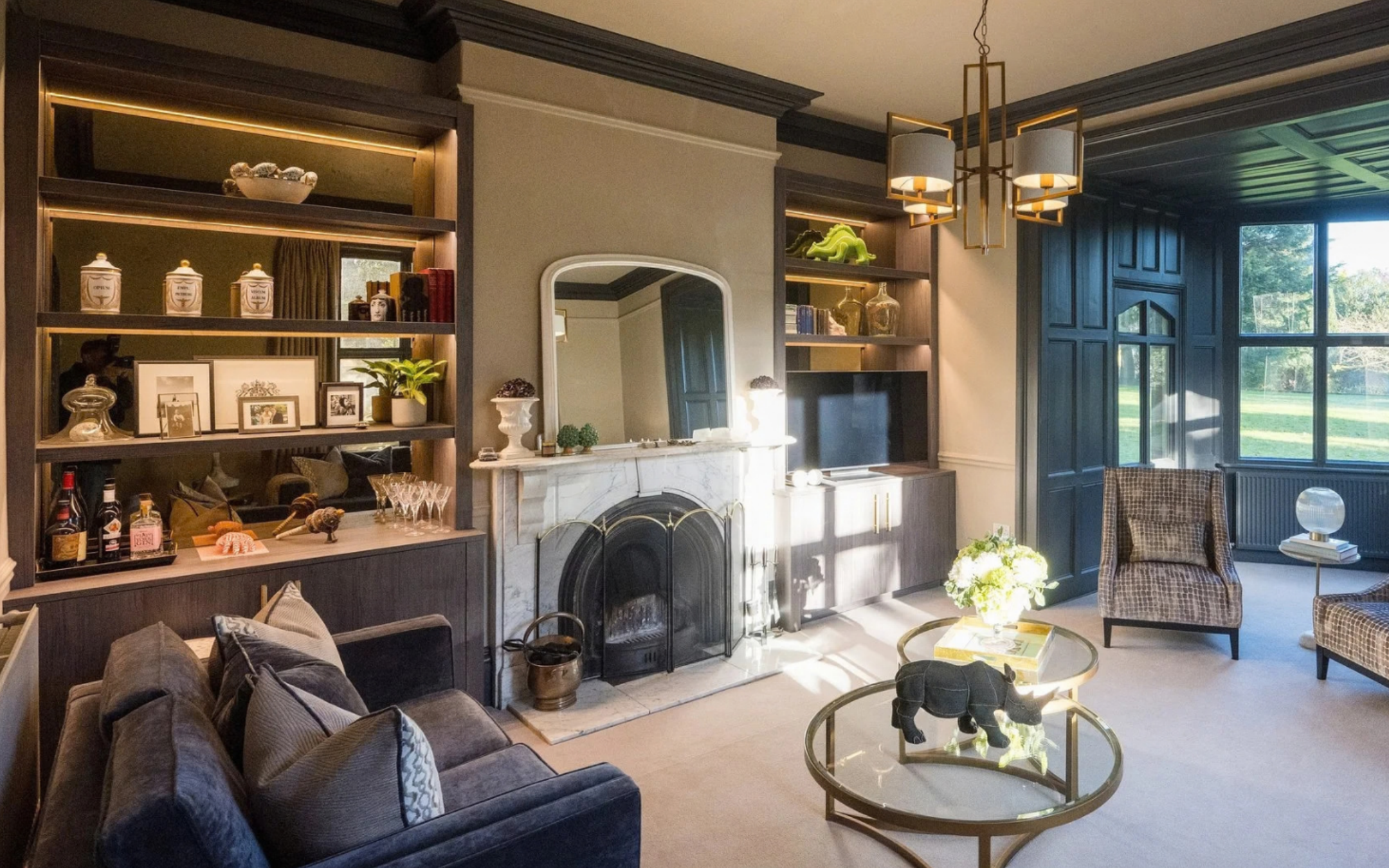
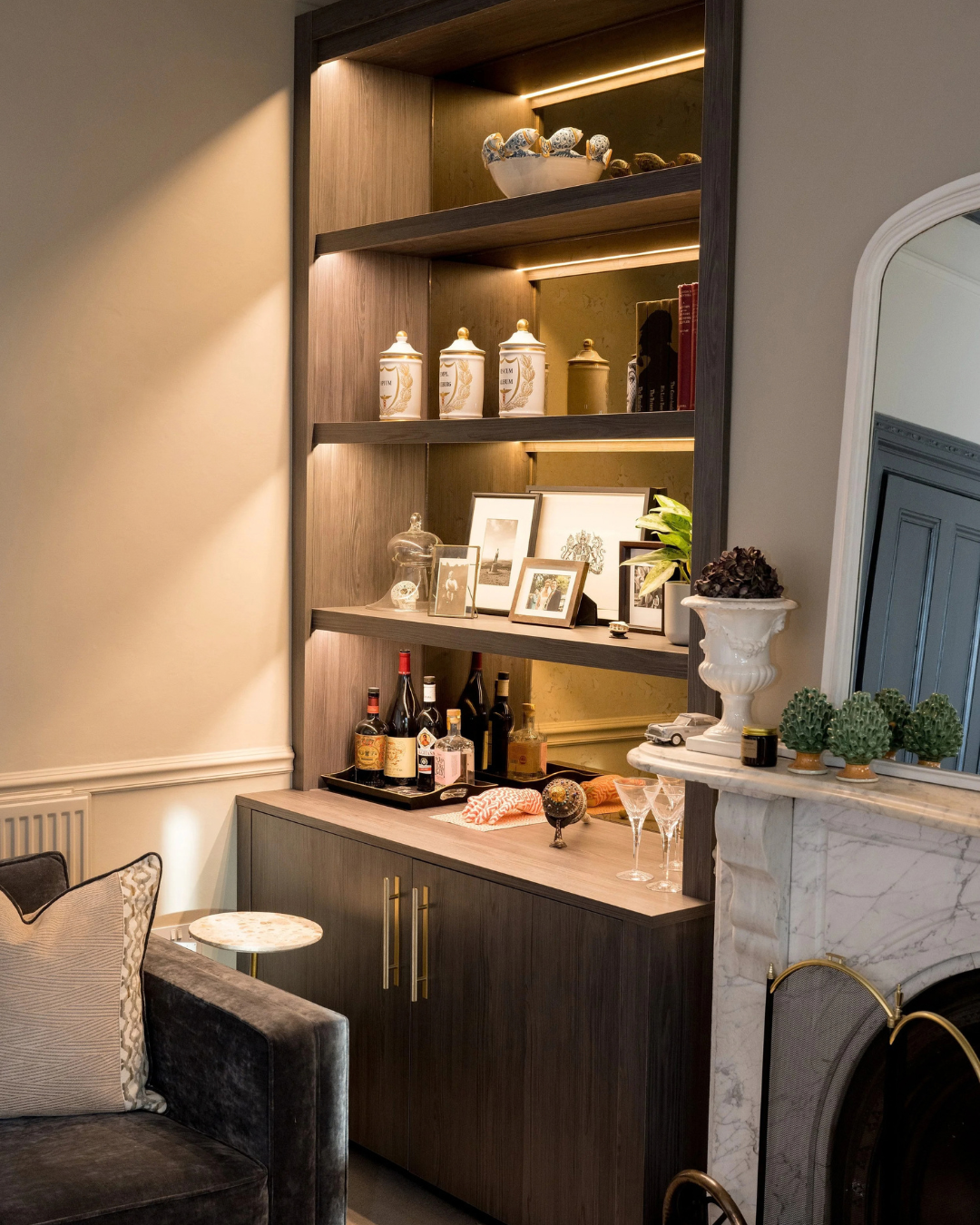
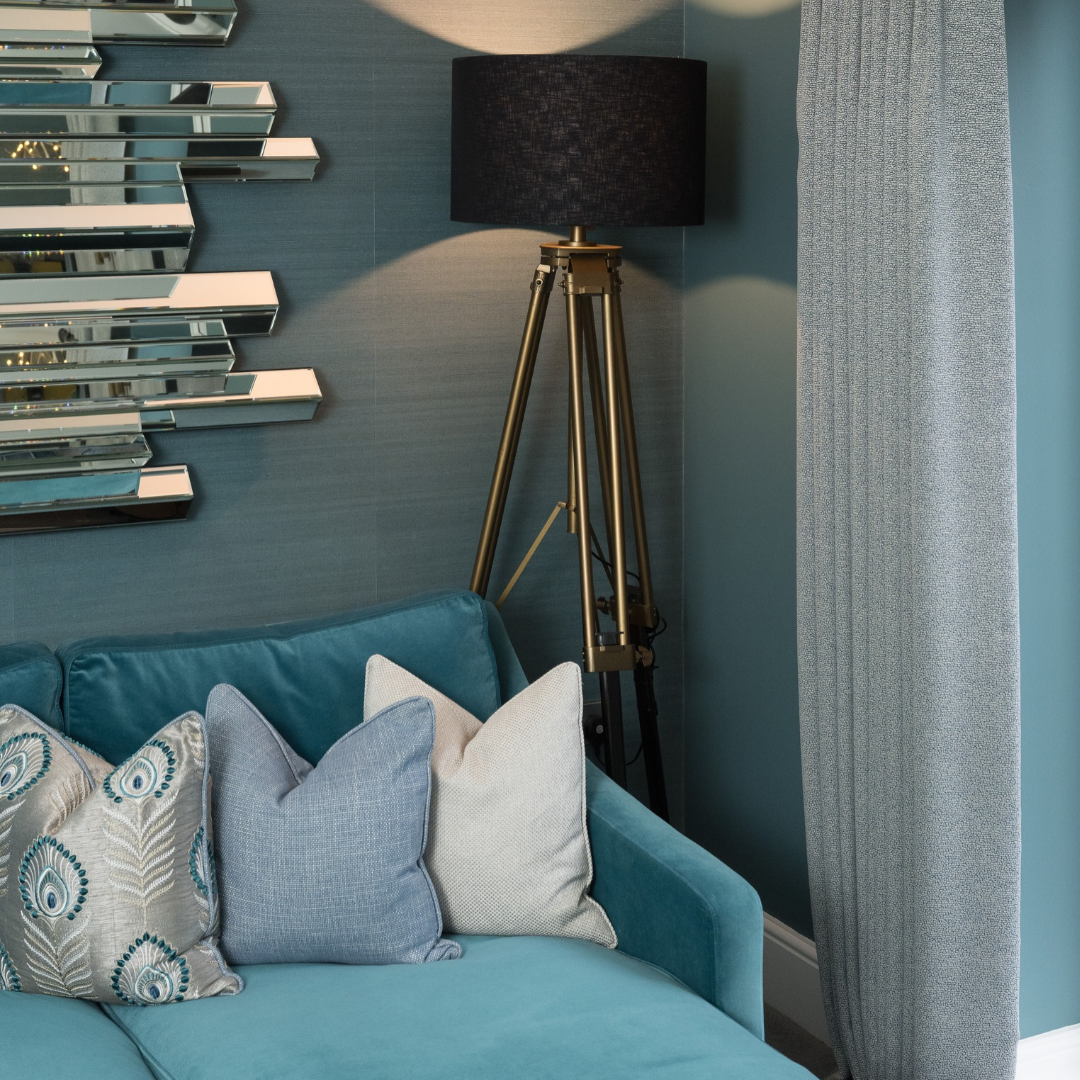
Mirrors positioned where they can reflect natural light, glass table lamps, metallic finishes and even fabrics with a subtle sheen can all help bounce light around the room.
Think about where daylight naturally enters the space and how the materials and finishes within the room interact with it.
Sometimes a few carefully considered reflective surfaces can make far more difference than simply reaching for another tin of white paint.
USE CONTRAST CAREFULLY
This might sound counterintuitive, but introducing some darker elements can actually help a room feel brighter.
When everything in a space is the same pale tone, the room can begin to feel flat. There’s nothing for your eye to anchor against and very little sense of depth.
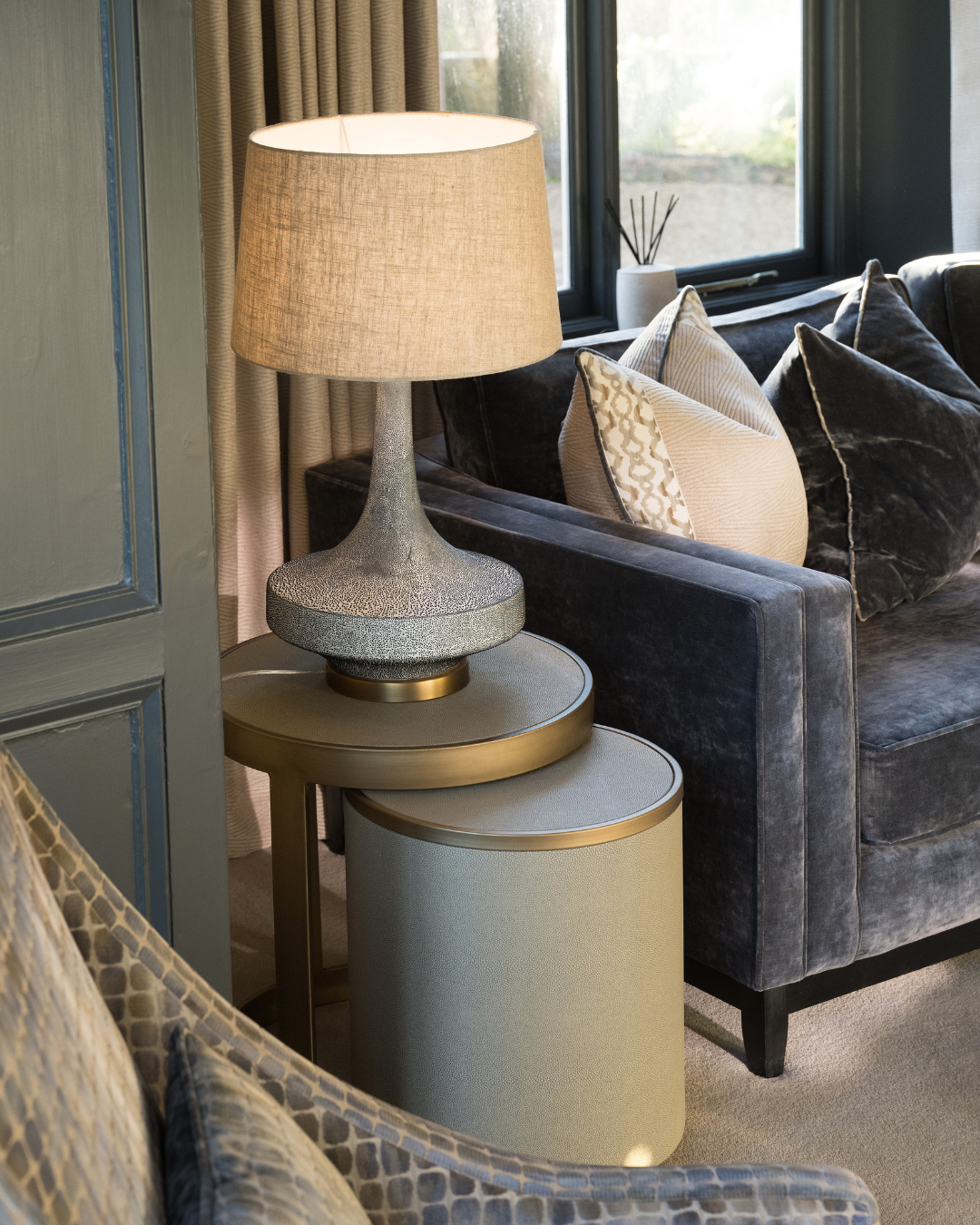
Introducing contrast through a darker chair, side table, lamp, artwork or piece of furniture gives the lighter elements something to sit against.
The key is balance.
You don’t need lots of dark pieces. Just enough contrast to give the room definition and make the overall scheme feel more intentional.
PAY ATTENTION TO YOUR WINDOW TREATMENTS
When natural light is limited, your window treatments need to work particularly hard.
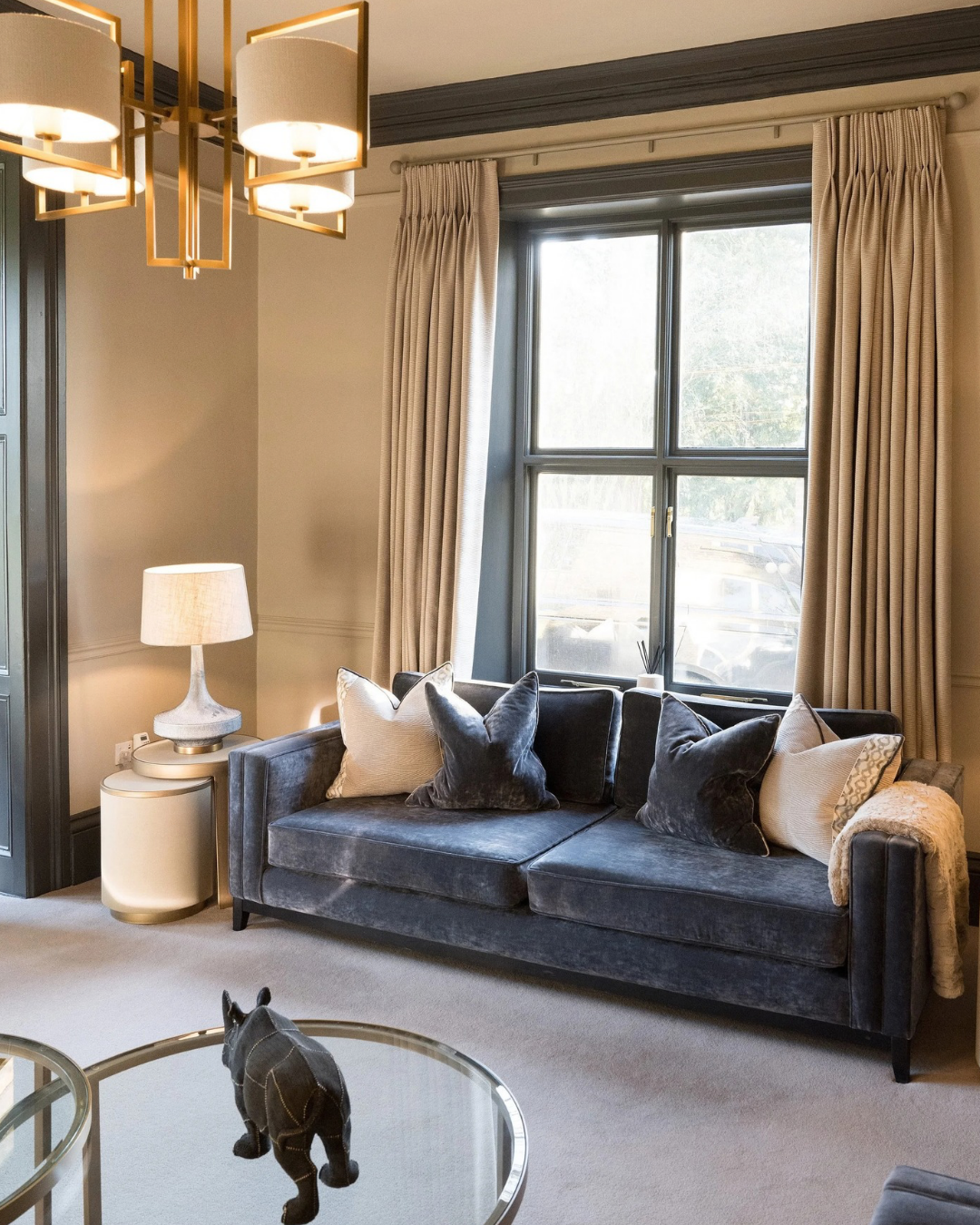
Heavy curtains positioned directly across part of the window can unintentionally block valuable daylight, even when they’re open.
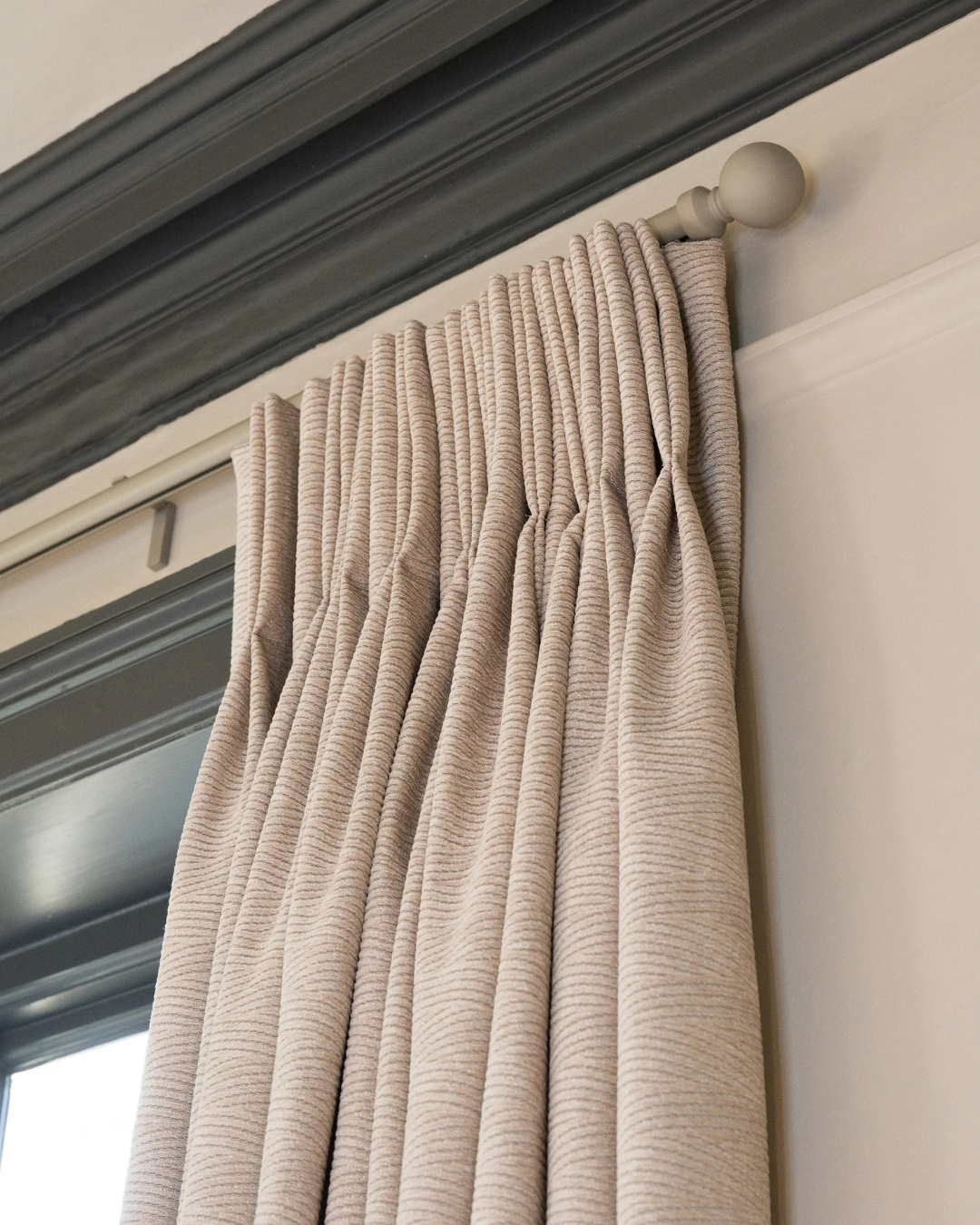
Instead, consider lighter fabrics, voiles or curtains fitted wider than the window so they can stack back beyond the glass.
This allows you to make the most of the available daylight while still adding the privacy, softness and warmth that beautifully designed window treatments bring to a room.
Made-to-measure curtains and blinds can be particularly useful here because their positioning, fabric and proportions can all be designed specifically around the window and the way light enters the space.
Layer Your Lighting
If a room doesn’t receive much natural daylight, artificial lighting becomes an even more important part of the design. And one ceiling light is rarely enough.
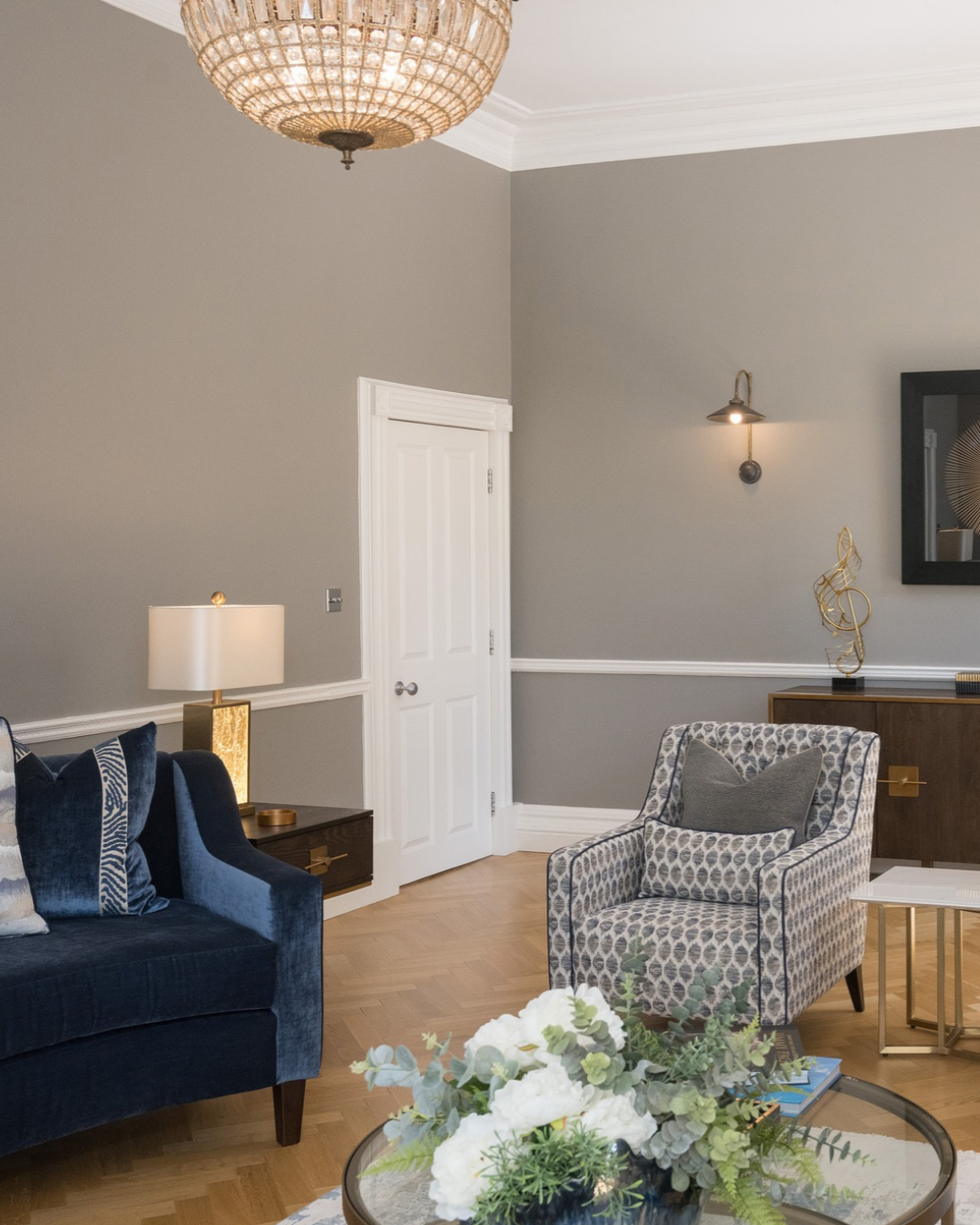
The rooms that feel warm and bright in the evening tend to have several sources of light positioned at different heights.
Think table lamps on side tables or consoles, wall lights, floor lamps and carefully positioned decorative lighting alongside your main ceiling lights.
Rather than trying to flood the entire room with one bright source, layered lighting creates pockets of warmth throughout the space. It makes a darker room feel alive rather than simply illuminated.
Choose Warmer Tones Than You Think
White isn’t always the safest choice for a dark room. When there’s very little natural light, some cool whites and greys can take on a flat, cold appearance.
Warmer neutrals, soft earthy shades and colours with warmer undertones can often create a much more welcoming result.
And don’t automatically rule out colour. Soft greens, warm pinks, gentle clay tones and even deeper shades can work beautifully when chosen with the room’s light in mind.
Always test your colours in the actual space and look at them throughout the day before making a final decision.

don’t fight the room
This might be the most important thing to remember.
Some rooms are simply never going to feel flooded with natural sunlight - and that’s okay.
Rather than constantly trying to make a naturally dark room feel bright and airy, sometimes the most successful design decision is to embrace what the room already does well.
A north-facing snug, for example, could become a beautifully cocooning space with richer colour, layered fabrics, warm lighting and plenty of texture.
Instead of fighting the room, work with its natural character.
A dark room doesn’t have to feel gloomy. With the right design choices, it can become one of the warmest and most inviting rooms in your home.
Common DARK ROOM Mistakes to Avoid
Automatically painting everything brilliant white
Relying on one central ceiling light
Choosing heavy window treatments that block natural daylight
Using lots of cool greys or whites without considering the room’s light
Avoiding darker colours altogether
Trying to force a naturally cosy room to feel bright and airy
FAQ’S
-
Warmer neutrals and softly muted colours can often work better than stark white, particularly in rooms with limited natural light. Always test colours in the room itself before committing.
-
Not necessarily. Some whites can appear cool or grey in north-facing light, so warmer undertones or more saturated colours may create a more inviting result.
-
Try repositioning mirrors, changing lampshades or bulbs, adding additional light sources and making sure curtains can open fully beyond the window to maximise the daylight you already have.
-
Absolutely. Rather than fighting the room’s natural character, a deeper colour can create a warm, cocooning effect that feels deliberate and beautifully considered.

Ready to Transform a dark room?
A room doesn’t need huge windows or endless natural light to feel beautiful.
With the right balance of colour, lighting, window treatments, texture and layout, even the darkest room can become somewhere you genuinely love spending time.
From our studio in Wetherby, North Yorkshire, we help homeowners create thoughtful, beautifully designed interiors that work with their homes rather than against them, working with clients locally and across the UK.
Book a Discovery Appointment or call 01937 581451 to chat through your project.
Visits by appointment only.